
Your Brand.
Our Print.
Custom product labels, COA verification inserts, business cards and branded print materials — thoughtfully designed and professionally printed in Canada.
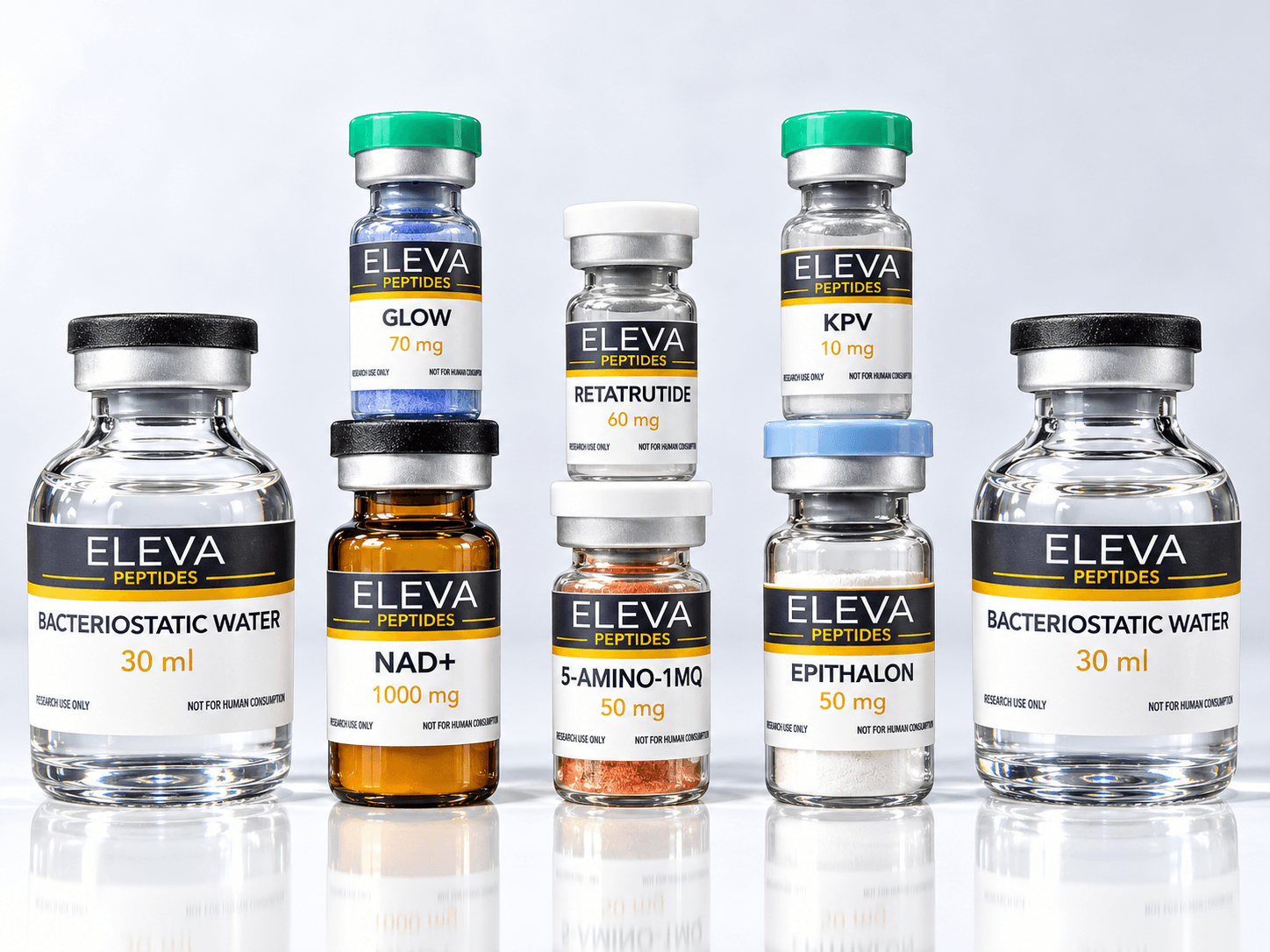
Print materials that work
as hard as your brand.
From small product labels to customer-facing inserts, we help bring a consistent, professional finish to your packaging and presentation.
Custom Product Labels
Vial labels, packaging labels and branded stickers, with options for durable, water-resistant materials.
COA & QR Insert Cards
Clean, professional cards that can connect customers directly to your chosen documentation or resources.
Business & Resource Cards
Business cards, information inserts and branded materials designed to make a lasting impression.
Custom Design Support
Need a print-ready layout? We can help develop a cohesive design for your project.
Real projects.
Thoughtful details.
Explore examples of our printed labels, cards and design work in the Custom Print & Design portfolio.
VIEW PORTFOLIO & SERVICES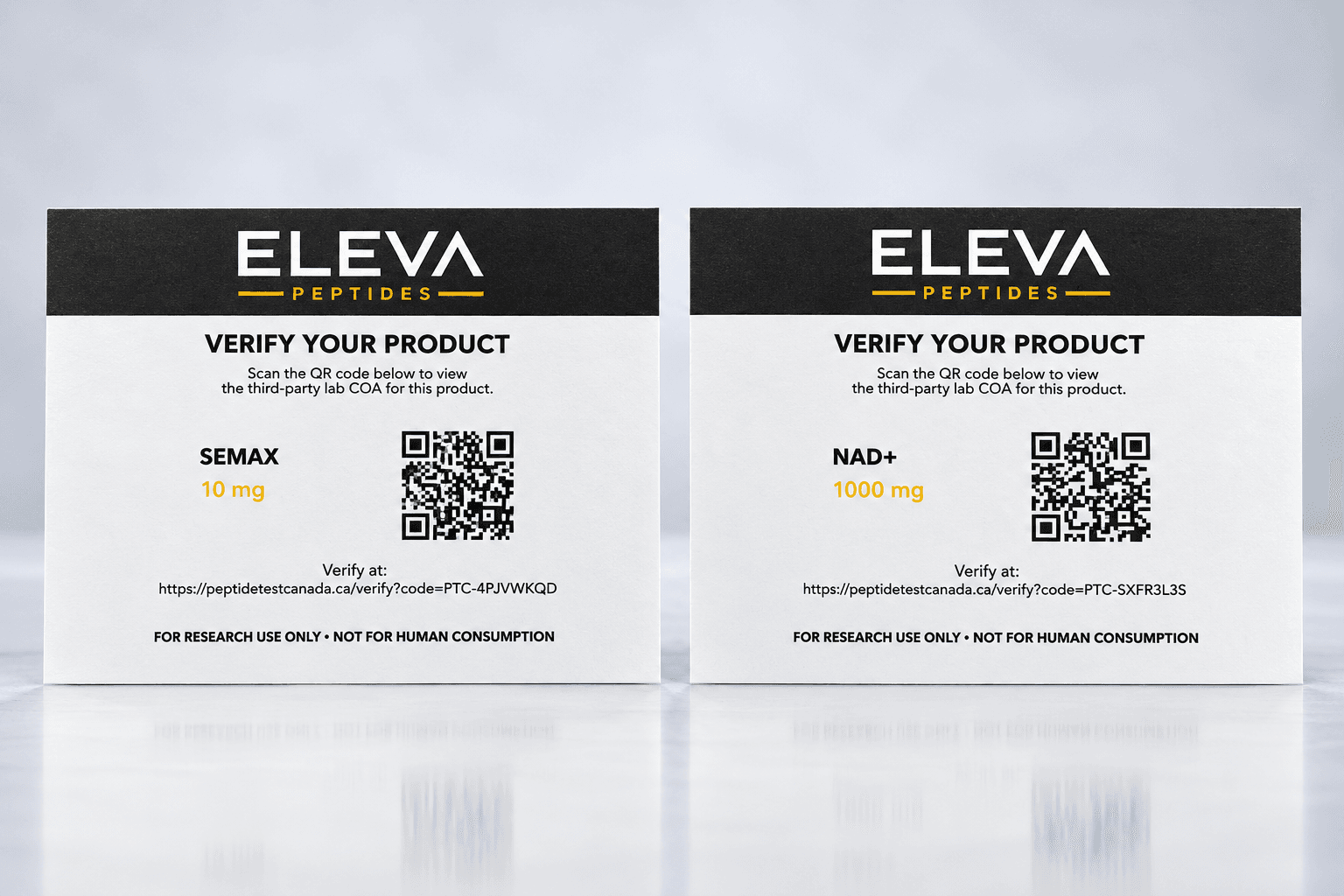
Have a print project in mind?
Tell us what you need, share your artwork, or request a quote through our Custom Print & Design page.
Research. Testing. Transparency.
Our original COA education, testing resources and research tools are still here. Explore them below.
Beyond the headline number.
Analytical reports contain more than a single percentage. Understanding what each result means provides better context.
How to Read a COA
Identity, measured content, purity, sample information and report details each answer a different question.
DOCUMENTATIONWhat LC-MS/MS Tells You
Analytical methods can support compound identification and quantitative measurement when properly calibrated.
ANALYTICAL METHODWhy Batch-Specific Testing Matters
A report is most useful when its sample, lot and testing information can be connected to the material reviewed.
BATCH CONTEXTPurity vs. Net Content
Purity and measured target content are different results. One should not automatically be interpreted as the other.
RESULT CONTEXT
Know what the report
actually says.
Testing documentation should be easy to inspect. Eleva keeps available Certificates of Analysis in a public library so the reported methods, sample details and analytical results can be reviewed directly rather than reduced to a marketing claim.
EXPLORE THE COA LIBRARYAvailable analytical reports are presented as supporting research documentation.
Testing documentation remains available through a public COA library.
Sample IDs, lot details, test dates and report numbers help connect results to the tested material.
Purity, identity and net content are presented as separate analytical concepts.
Research. Documentation. Clarity.
Transparent Testing
Public analytical documentation makes available results easier to inspect and verify.
Clear Terminology
Educational content separates analytical concepts instead of collapsing them into one headline claim.
Batch Awareness
A report is most useful when the tested sample can be connected to its corresponding batch or lot information.
Research Education
Eleva publishes plain-language educational material around COAs, analytical methods and result interpretation.
Four details worth checking.
Check the compound and sample information reported by the laboratory.
Understand what technique was used and what that method is designed to measure.
Review identity, net content, purity and other reported findings as separate results.
Look for report numbers, testing dates, batch context and independent verification information.
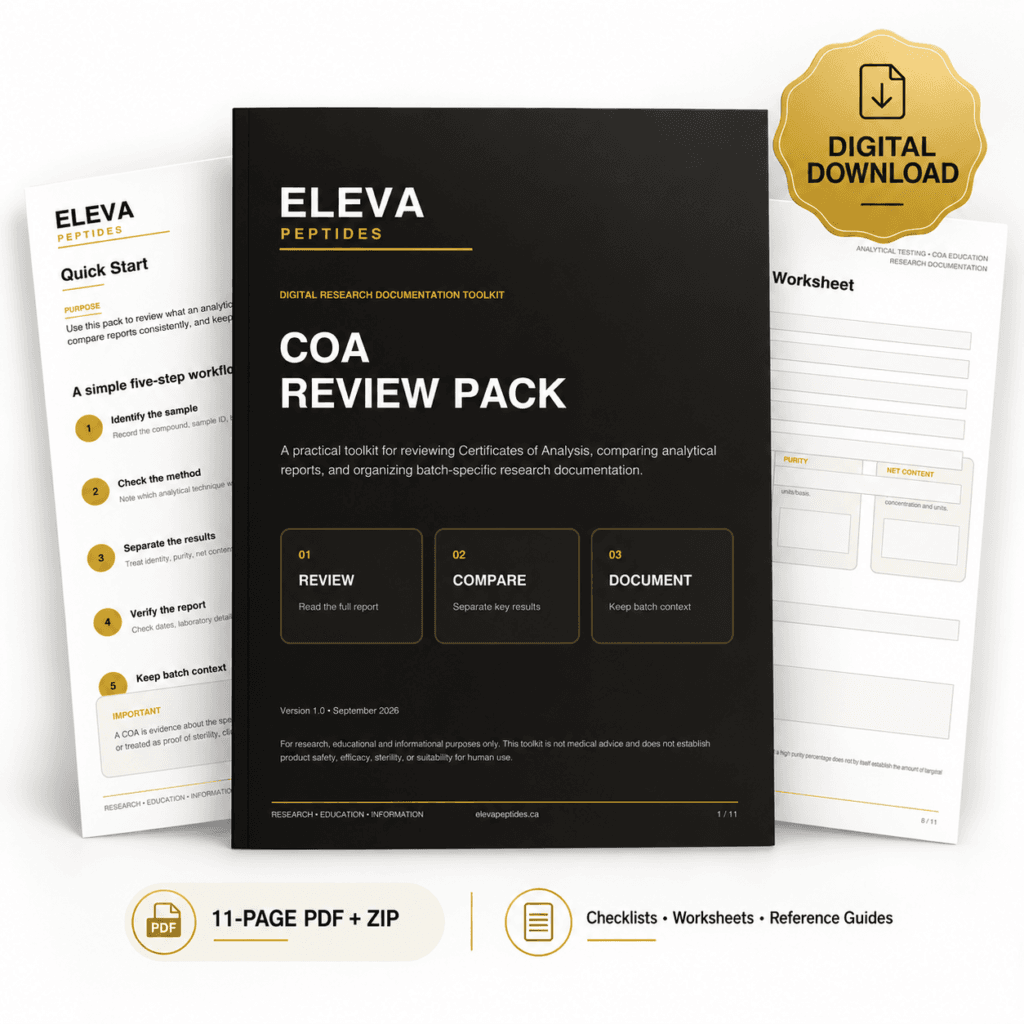
Eleva COA Review Pack
An 11-page fillable toolkit for reviewing Certificates of Analysis, comparing analytical reports, documenting batch-specific testing and keeping research records organized.
Built around transparency.
Eleva Peptides is a Canadian research-information project built around clearer documentation, analytical transparency and practical research education.
The goal is simple: make available testing information easier to find, easier to read and easier to understand.
LEARN MORE ABOUT ELEVA →Better research starts with better information.
Review available analytical documentation, explore independent testing resources and learn how to interpret common analytical results.